Großglockner Hochalpenstraße: Engineered Geometry and Cobblestone Friction
Linking Salzburg province to Carinthia through the High Tauern national park, the Großglockner is the gold standard of alpine road architecture: consistent banking, immaculate drainage, and thirty-six numbered hairpins.
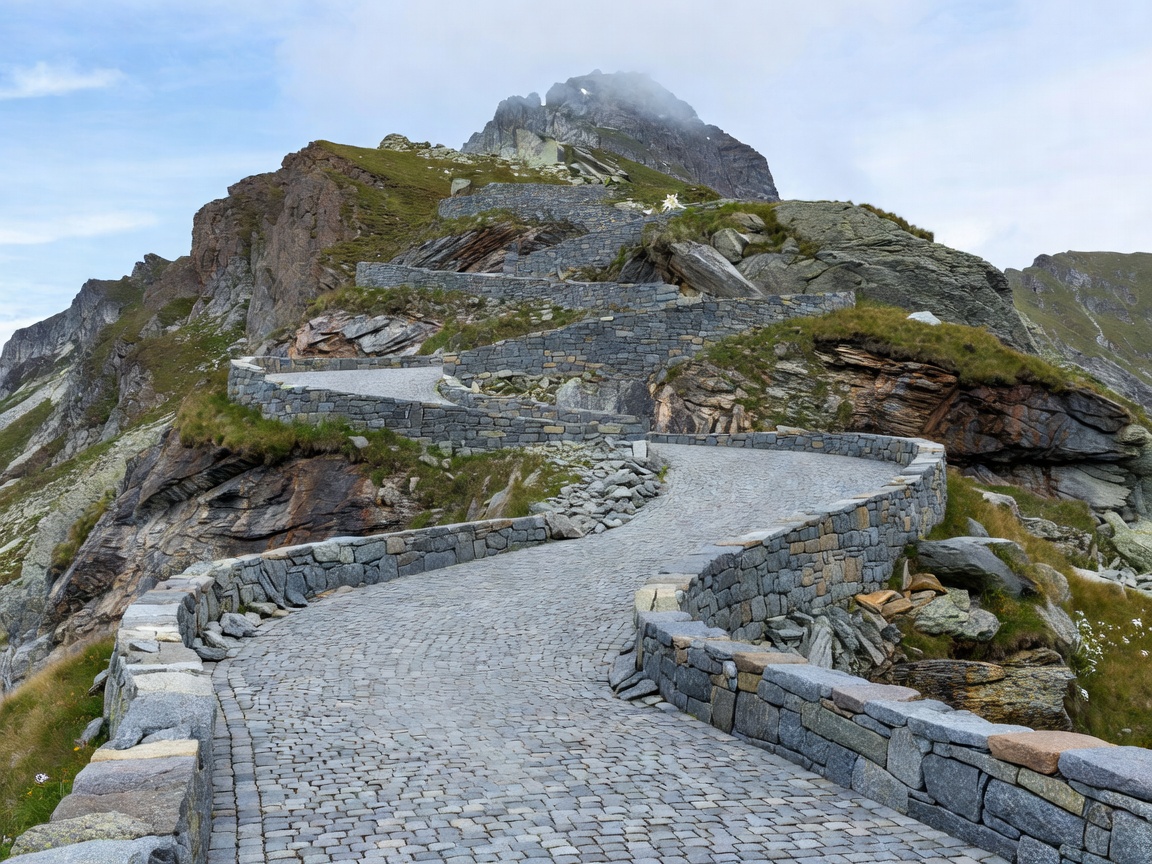
The Edelweissspitze spur: tight radius turns lined with hand-laid granite cobblestones providing distinctive slip characteristics.
Engineered 12% InclineStandard Maximum Grade
36 Numbered KehrenApex Sequence Density
Hochtor 2,504m TunnelProvincial Divide Bore
Wallack’s Civil Triumph: The Constant 12-Percent Gradient
Conceived and constructed under civil engineer Franz Wallack during the 1930s, the Großglockner High Alpine Road was specifically laid out to accommodate the mechanical limitations of combustion vehicles. Unlike older military pass roads that spike erratically into twenty-five percent ramps, the Hochalpenstraße holds an almost uninterrupted twelve-percent climb from the Ferleiten toll station to the Hochtor summit tunnel. This mathematical consistency transforms how a driver approaches the mountain: rather than constantly juggling first and second gear to keep the engine from stalling, you can lock the transmission into a steady second or third gear ratio and focus entirely on apex line choice and weight distribution.
The road width is uniformly generous, designed with banked curves that support the chassis through positive camber. This camber generates natural downforce, reducing lateral tyre scrub and allowing vehicles to carry higher mid-corner speeds without washing out. However, the sheer repetitive rhythm of thirty-six numbered switchbacks (Kehren) places enormous cumulative demand on the front axle. Scrubbing steering angle under power on thirty-six consecutive turns will overheat front tyre compound shoulders rapidly unless the driver employs clean late-apex entries that unspool steering lock early on exit.
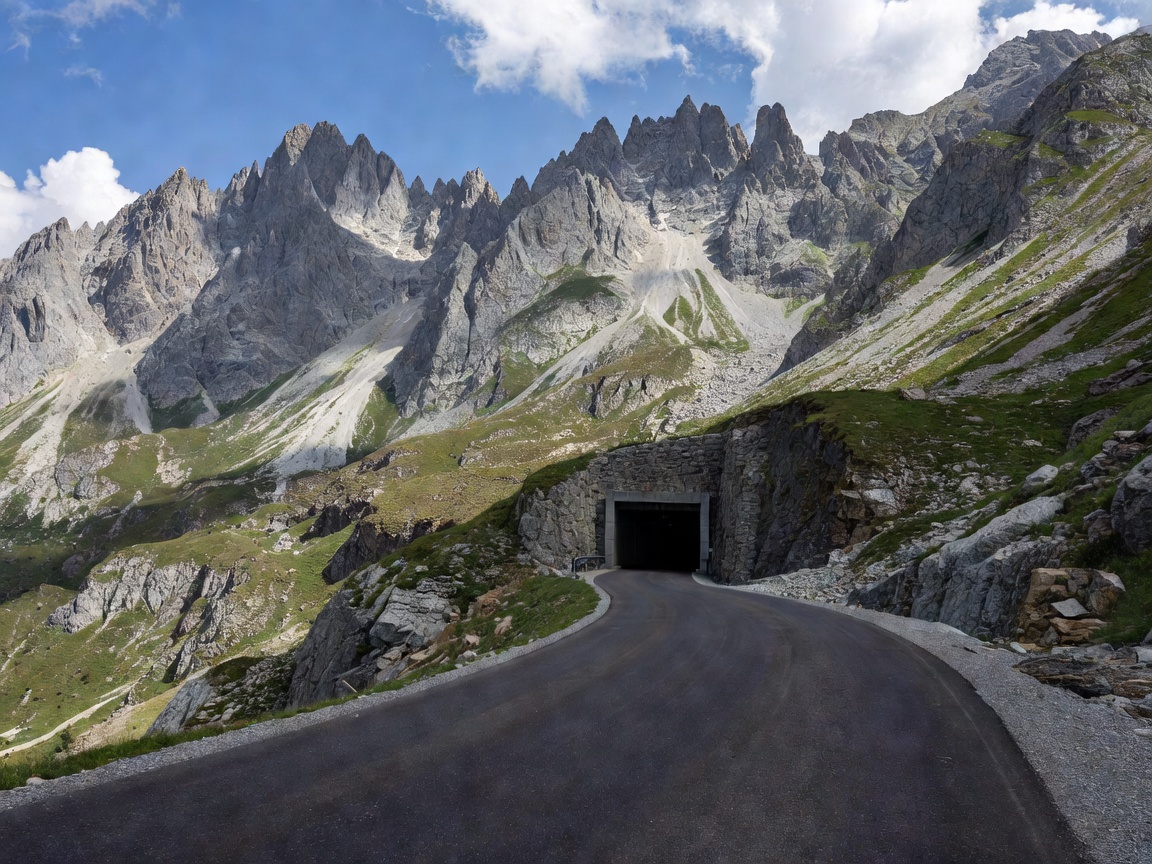
Approach to the Hochtor: immaculate asphalt texture, wide radiuses, and stone catch-berms allowing measured high-altitude throttle control.
The Edelweißspitze Challenge: Granite Setts and Yaw Rate
Just north of the main ridge, a narrow cobblestone spur road branches off toward the Edelweißspitze at 2,571 metres. This is the highest driveable vantage point on the entire route, paved not in modern asphalt but in hand-laid granite paving stones (setts). Driving over these stone blocks provides an immediate tactile shift through the steering rack. The high-frequency vibration reduces the effective tyre contact patch, and if there is morning frost or rain present, the friction coefficient drops dramatically.
Climbing the six tight switchbacks of this cobbled spur requires delicate throttle feathering. Rear-wheel-drive platforms with limited-slip differentials will experience immediate power-on yaw if power is applied abruptly before the chassis has straightened. A gentle, progressive squeeze on the accelerator allows the tyres to find traction between the mortar joins without spinning wheels and losing forward drive.
The Descent to Heiligenblut: Thermal Recovery Protocols
Passing through the historic Hochtor tunnel brings you onto the southern Carinthian descent toward the alpine village of Heiligenblut. Here, gravity works against every kilogram of your vehicle's kerb weight. The twelve-percent descent is continuous over fifteen kilometres. Even with the finest multi-piston performance braking systems, continuous friction application will saturate the brake rotors, sending temperatures soaring past 600 degrees Celsius and charring organic pad compounds.
The correct technique is deliberate threshold braking: apply firm, heavy brake pressure for three seconds to shed twenty miles per hour before the turn, then release the pedal completely through the corner and the short straight to let the ambient mountain air flow through the ventilated rotor vanes. Matching this with low-gear engine braking relieves the calipers of roughly half their thermal workload. The Hochalpenstraße is a rare highway that rewards technical driving discipline with flawless, repeatable mechanical feedback.