North Coast 500: Highland Single-Track and Passing Dynamics
Looping from Inverness around the northern tip of Great Britain, the NC500 balances the alpine gradient of Bealach na Bà against hundreds of miles of single-track chip-seal demanding rigorous passing etiquette and suspension travel.
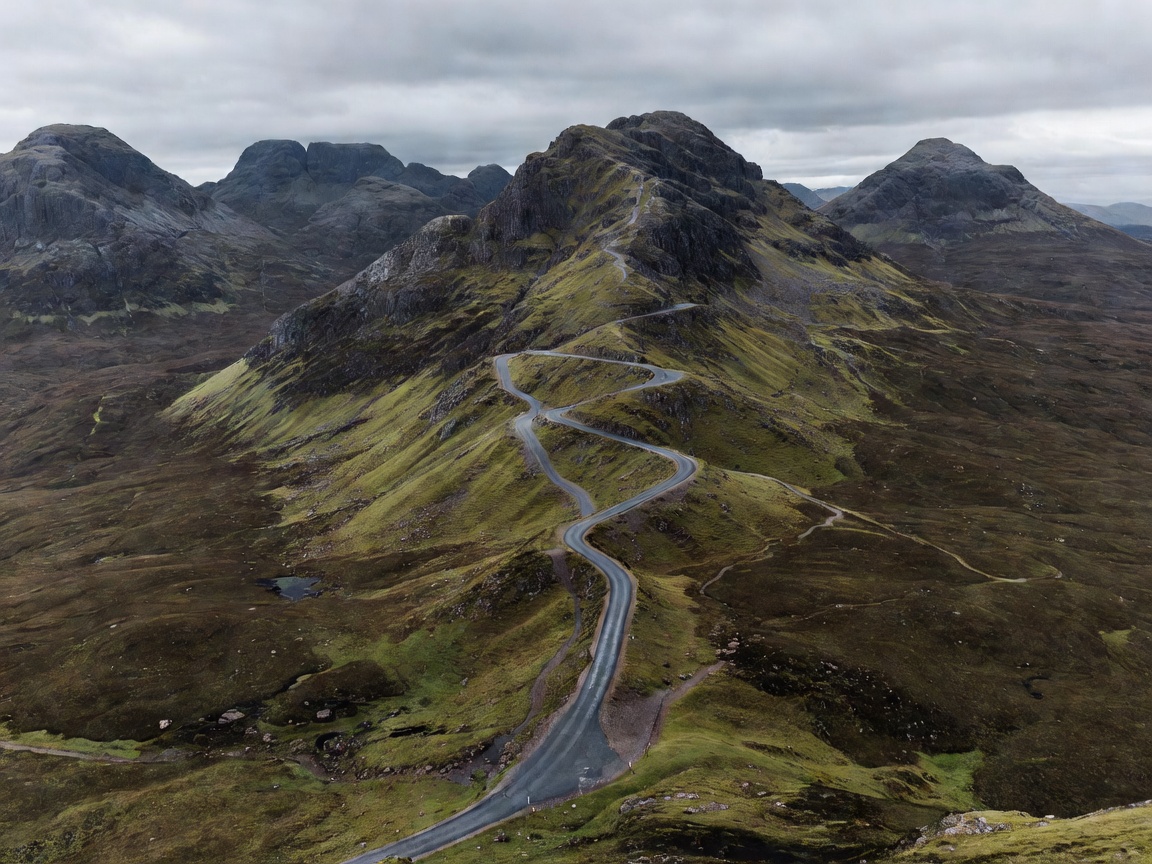
Bealach na Bà ascent: 20-percent gradients, single-lane tarmac, and acute hairpins testing low-speed clutch control.
Single-Track NetworkPrimary Corridor Profile
Passing Place RulesEssential Road Etiquette
Coarse Scottish Chip-SealTarmac Composition
The Applecross Crucible: Bealach na Bà Grade and Camber
Climbing out of Tornapress toward the Applecross Peninsula, the Bealach na Bà boasts one of the steepest continuous ascents of any paved highway in the British Isles. The road rises from near sea level to 626 metres in just over eight kilometres, with gradients spiking up to twenty percent on the final upper switchbacks. For manual transmissions, this incline places extreme shear stress on clutch friction plates during stop-start encounters with oncoming traffic. Drivers must balance handbrake release and rev matched engagement to avoid glazing the clutch disc on steep restarts.
The road here is single-track, punctuated every hundred metres by designated passing places. The fundamental rule must be observed without exception: always give way to vehicles climbing uphill, as re-initiating momentum on a steep incline places severe mechanical strain on the climbing car. Never cross to the opposite side of the road into a passing place on your right; instead, halt parallel to it on your left and let the oncoming car negotiate around your vehicle.
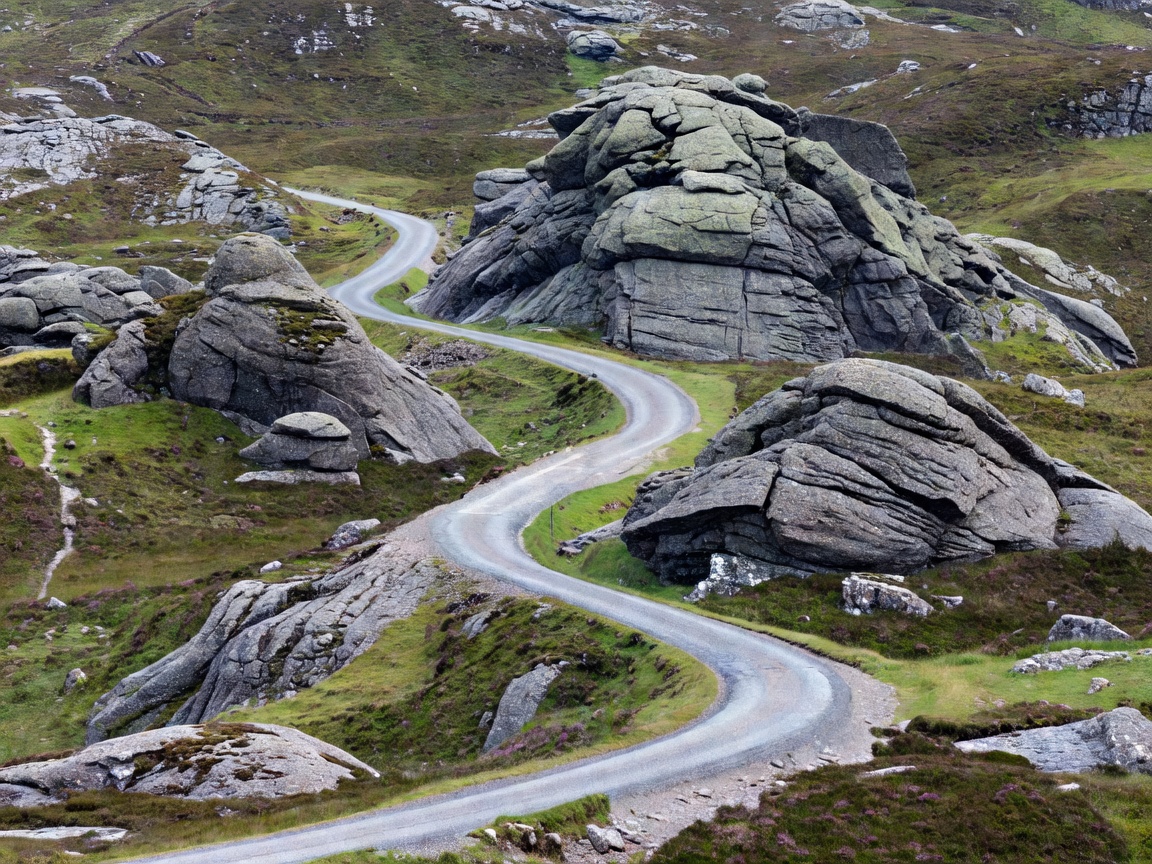
The Assynt coastal loop: technical twists over Lewisian gneiss where blind crests require strict defensive positioning.
The Abrasive Rhythm of Wester Ross and Sutherland
Past Applecross, the route snakes around Torridon, Gairloch, and Ullapool before entering the barren, lunar landscape of Assynt. The tarmac across Sutherland and Caithness is predominantly coarse chip-seal—rough granite chips pressed into a bitumen binder. While this surface provides ferocious mechanical grip even in torrential Scottish downpours, it generates deafening tyre roar inside the cabin and accelerates tyre tread wear rapidly.
Furthermore, the loose gravel chips kicked up by passing vehicles are a primary cause of windscreen stars and radiator puncture. Increasing your following distance behind preceding traffic and dropping road speed to a moderate crawl when passing oncoming vehicles on single-lane sections protects both your heat exchangers and the paintwork along your rocker sills. The road edges throughout Sutherland frequently crumble into soft peat ditches; dropping a wheel off the tarmac into the soft shoulder at speed can easily induce snap-oversteer or severe rim impact damage.
Durness to John o' Groats: Wind Shear and Long Sweepers
Rounding Cape Wrath and pushing east past Durness, the route transitions from tight technical loops to wide, exposed coastal roads skirting the Pentland Firth. The dominant challenge here shifts from suspension travel to aerodynamic stability. Crosswinds howling off the North Sea strike the chassis with violent, unpredictable gusts as you emerge from rock cuttings onto exposed cliff-top causeways.
Vehicles with high aerodynamic drag or aggressive wing profiles will experience sudden yaw moments, requiring rapid, minute micro-corrections at the steering wheel to maintain a true lane track. Maintaining steady throttle pressure through high-speed sweepers helps plant the rear diffuser, ensuring the car remains settled and predictable. Finishing the northern loop down the A9 spine back toward Inverness, the NC500 proves that driver discipline and mechanical sympathy matter far more than outright horsepower.