Route des Grandes Alpes: Channelling Thermal Mass and Summit Cambers
From the fresh waters of Thonon-les-Bains to the coastal shelf of Menton, crossing sixteen alpine cols is an uncompromising test of brake fluid boiling points, transmission temperature limits, and chassis poise.
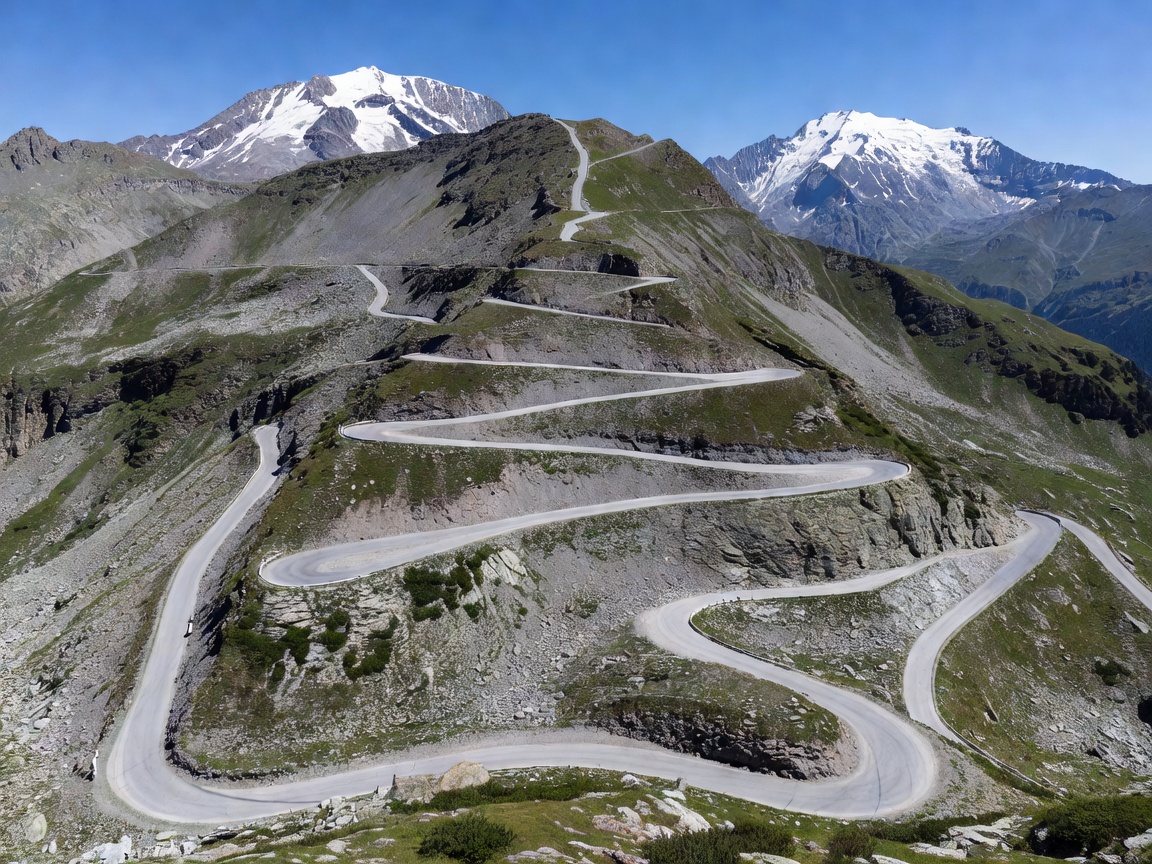
The northern ramp of Col de l'Iseran: severe gradient variations and negative camber on hairpins demand trail braking with high front tyre slip angles.
Subalpine to MaritimeClimatic Zone Variation
16 Major Alpine ColsPrimary Topological Features
Heavy Thermal CyclesBraking System Demand
Topological Stacking: The Northern Ramp from Thonon to Val-d'Isère
The transition from the shores of Lake Geneva through the Col des Gets and the Col de la Colombière presents an immediate technical cadence. The tarmac composition on these lower Savoyard passes is dense and resin-rich, offering high lateral traction in the dry but polished to a low friction coefficient over cattle grids and drainage channels. Drivers carrying momentum through these medium-radius sweepers quickly notice how the chassis roll axis influences turn-in crispness. If your damper valving is overly stiff on high-speed compression, the frost-heaved lateral joints across the Col des Aravis will throw the front axle off line midway through a committed corner entry.
Ascending further south, the valley floor yields to the severe vertical exposure of the Col de l'Iseran. As the highest paved mountain pass in the Alps, the air thins markedly above 2,500 metres. This atmospheric starvation has a pronounced effect on unblown induction circuits, where throttle response turns dull and pedal travel must be widened substantially to maintain exit speeds. For forced-induction machinery, the turbocharger turbine speeds escalate rapidly to preserve preset boost thresholds, turning exhaust gas temperatures and intake charge values sharply upward. Managing engine oil temps on sustained second-gear pulls requires disciplined cooling runouts rather than abrupt engine shut-offs at the summit cairn.
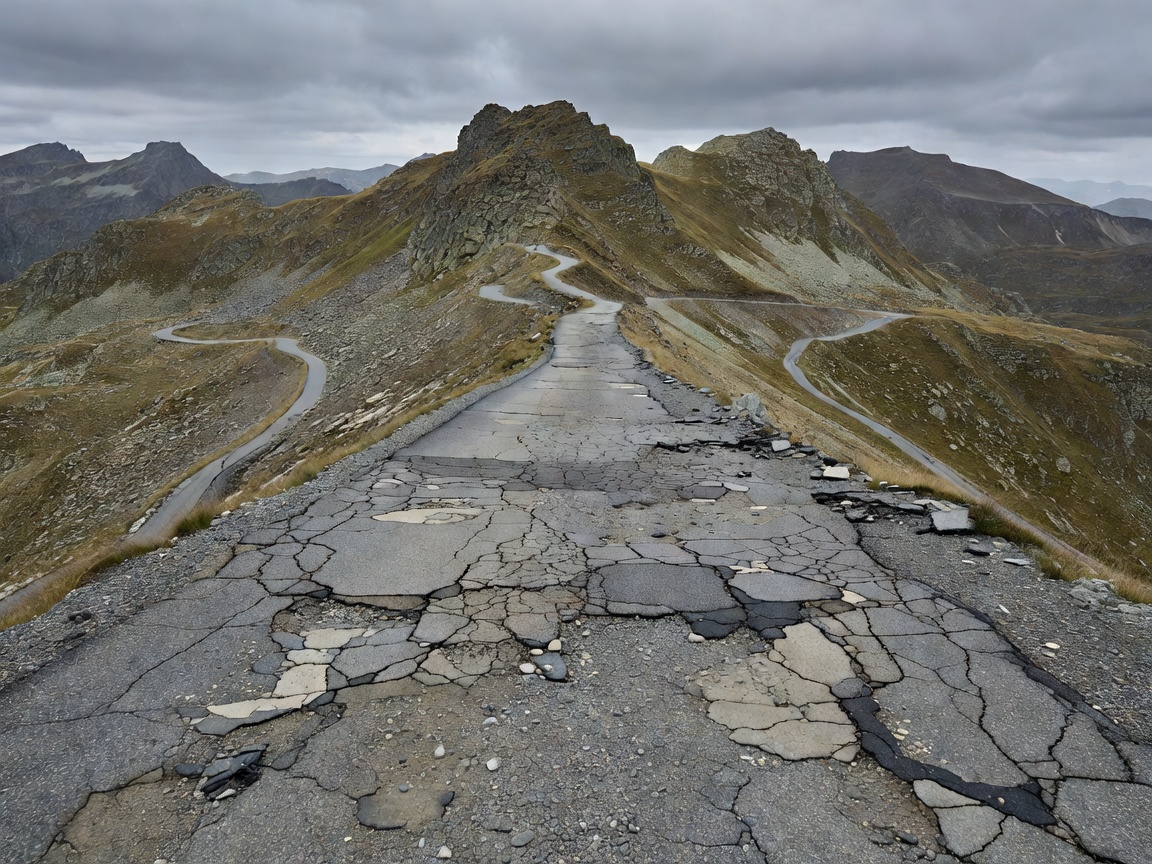
Col du Galibier southern descent: steep drops, uneven micro-texture, and absence of armco railings enforce conservative corner entry points.
The Crucible of the Central Massif: Telegraphe and Galibier
Descending from the Col du Télégraphe into Valloire brings an immediate tactical dilemma: managing brake rotor temperatures before the grueling ascent of the Col du Galibier. The gradient descending the southern spur of the Galibier toward the Lautaret is relentless. Drivers relying on caliper friction rather than progressive engine braking will induce fluid vaporisation long before reaching the valley floor. High brake fluid temperatures manifest first as a spongy, lengthened pedal stroke, followed swiftly by total travel collapse as trapped moisture converts to compressible steam.
Selecting second or third gear manual transmission overrides allows the powertrain’s inherent compression to pin the drivetrain, maintaining steady backpressure against the differential. This strategy keeps caliper face temperatures within normal operating thresholds, preserving pedal bite for the sharp 90-degree off-camber hairpins that litter the rocky descent. Tyre pressures also expand dramatically over this leg: an initial cold pressure of 32 PSI at Lake Geneva can easily pump past 39 PSI under continuous alpine cornering friction and elevated surface heat, drastically diminishing the tyre's working contact patch unless bleeder adjustments are made.
The Southern Descent: Izoard Scree to Menton Maritime Air
The Casse Déserte on the southern flank of the Col d'Izoard presents a stark geological transformation. The road narrows between scree slopes of weathered gypsum and loose limestone shale. Wind-blown grit regularly settles across the apexes of blind right-handers, instantly cutting tyre grip levels by half. Smooth trailing throttle inputs are vital here; abrupt mid-corner lift-off transfers weight forward too violently, breaking rear traction on fine stone wash.
Crossing through the Col de Vars and the towering sweep of the Col de la Bonette, the route finally snakes through the narrow gorges of the Alpes-Maritimes. As the road dives through the Col de Castillon toward the Mediterranean Sea, ambient temperatures jump and the crisp dry mountain air gives way to heavy, humid coastal air. Brakes that cooled efficiently in the sub-zero summits now face convective resistance in warm sea-level air. Navigating the final technical hairpins above Menton with mechanical poise represents the ultimate reward for disciplined vehicle management.