Wild Atlantic Way: Maritime Aggregates and Peat Foundation Heave
Stretching from the Inishowen Peninsula to Kinsale, Ireland’s western perimeter demands exceptional chassis composure over undulating peat sub-bases, narrow hedgerow sightlines, and sudden saltwater moisture coats.
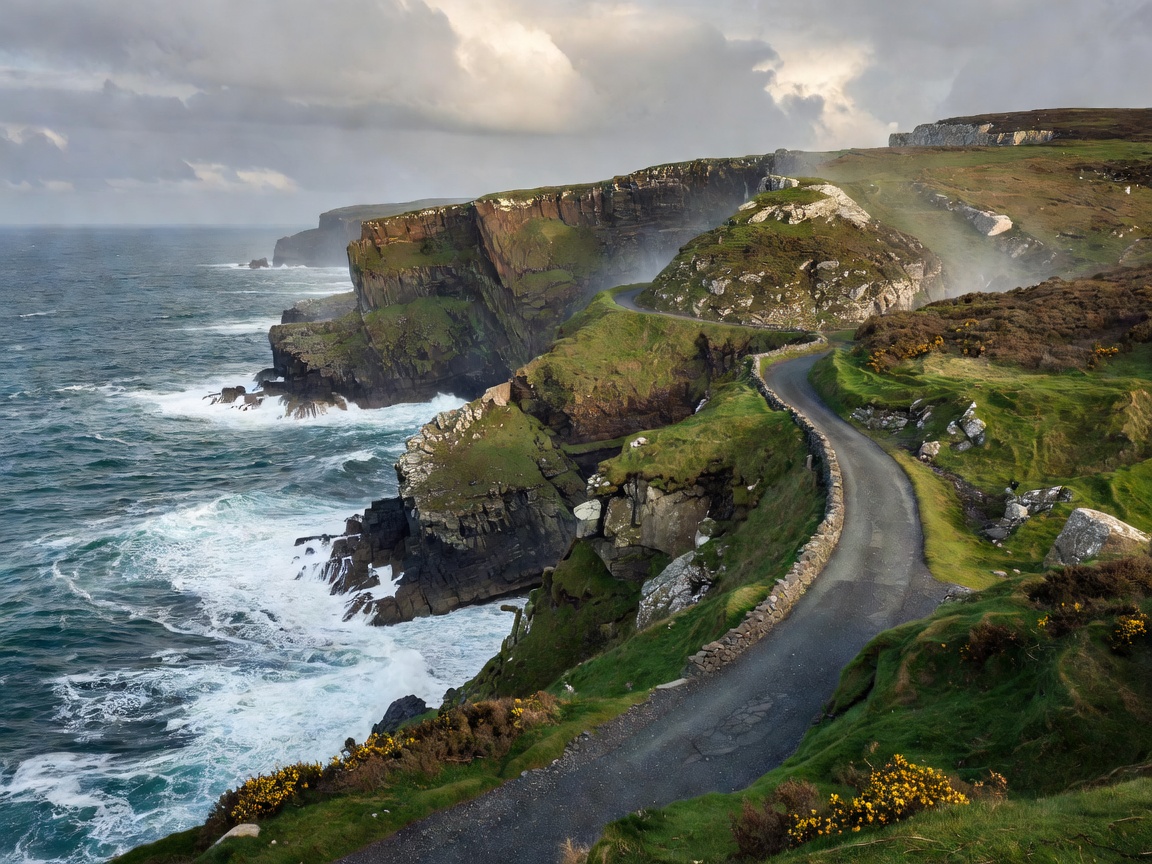
West coast regional tarmac: high-frequency vertical inputs and narrow shoulder margins bordered by rough stone walls.
The Geology of Grip: High Micro-Roughness Versus Sea Mist
The road surfaces flanking the western coast of Ireland, specifically across the R-classified regional routes through Connemara and County Clare, are constructed using crushed local basalt and limestone aggregate. In bone-dry conditions, this macadam offers extraordinary levels of mechanical interlock. However, the proximity of the North Atlantic means the roadway is rarely bone-dry; sea spray and low cloud deposit a micro-film of moisture mixed with windborne salt crystals. This salt film prevents water from beading cleanly and lowers initial braking friction on cold cast-iron rotors.
Tyre compound selection is crucial on these routes. Highly track-focused summer tyres with high void ratios struggle to generate sufficient internal carcass heat in the damp 12-to-15 degree coastal air. An ultra-high-performance road tyre with high silica dispersion in the tread rubber compound will bite through the maritime film, maintaining steering precision without needing continuous aggressive load cycles to stay within its operating thermal window.
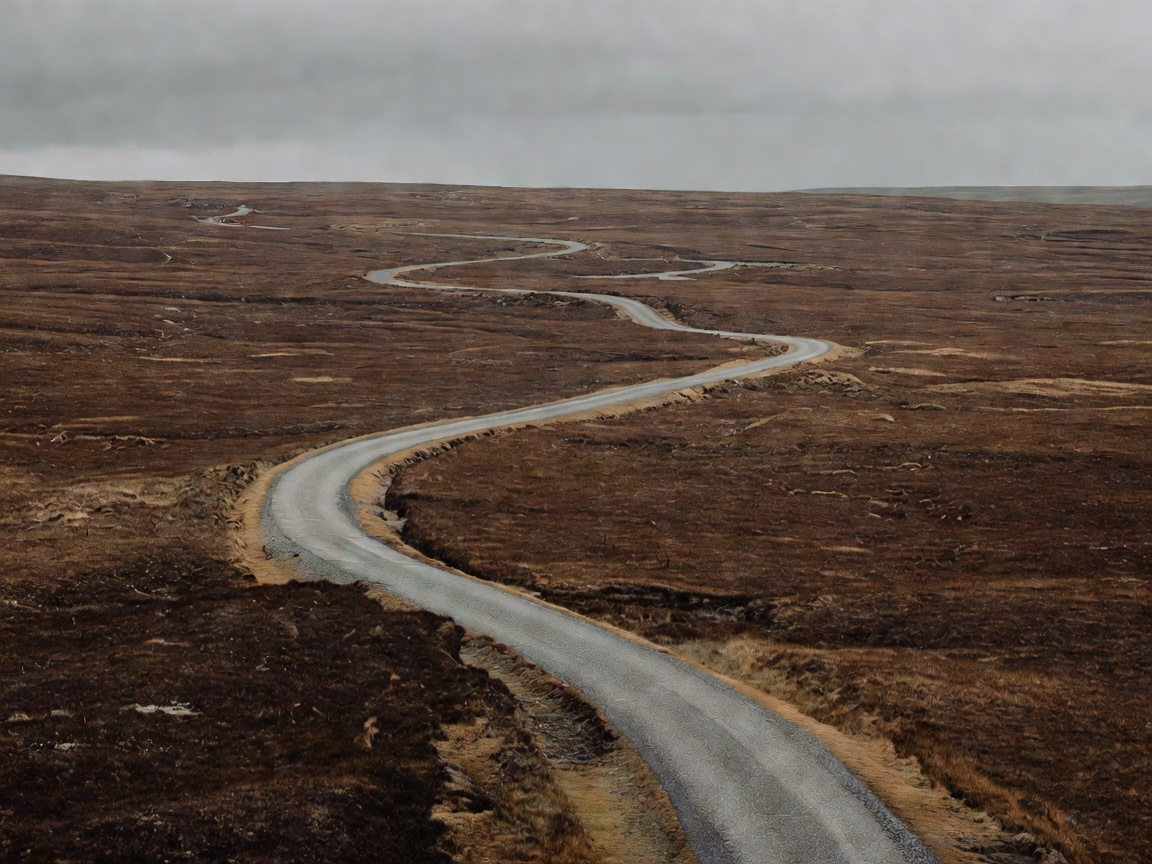
Connemara bog roads: long wavelengths of peat subsidence generate sudden chassis heave and bump-stop compression.
Peat Heave Dynamics: Vertical Damping Challenges in Mayo and Galway
Unlike alpine roads cut into solid granite bedrock, significant portions of the coastal roads in Mayo, Sligo, and Galway are laid over deep peat bogs. The lack of a rigid underlying substrate creates long-wavelength undulations and abrupt settlement dips. As a car crests a rise at speed, the suspension decompresses fully, only to be smashed into severe compression damping at the bottom of the peat wave.
If your vehicle's dampers lack adequate rebound control, the front end will oscillate repeatedly after each dip, destabilising the rear axle just as you turn in for the next corner. A chassis with independent rear suspension and generous wheel travel tracks these heave patterns far more effectively than an ultra-low, stiffly sprung platform that continually hits its secondary bump stops. Drivers must learn to read the slight colour variations in the tarmac; darker ribbons often indicate fresh asphalt laid over a recently sunken peat pocket, signaling an immediate suspension strike ahead.
Peninsula Precision: Healy Pass and the Kerry Headlands
The southern peninsulas—Beara, Iveragh, and Dingle—bring technical elevation into the equation. The Healy Pass (R574), cutting through the Caha Mountains on the Beara Peninsula, is an exceptional sequence of tight, tight switchbacks carved between massive exposed boulders. The road here is barely wide enough for two vehicles to pass, demanding precise placement of your nearside tyres along the uncurbed grassy verge.
Forward anticipation is paramount. Because dry-stone walls and high fuchsia hedgerows blind the entry into almost every curve, drivers must look far across the valley floor to identify oncoming commercial vehicles or agricultural machinery before committing into a series of linked apexes. Smooth steering inputs, disciplined entry speeds, and active reliance on mid-range engine torque rather than redline hunting allow you to maintain an effortless, flow-state pace across this wild Atlantic fringe.